How Culture Shapes the Practice: Part 2
In Kenya, yoga felt like a cultural mirror: vibrant, communal, unmistakably local.
Cambodia? She’s… not quite giving that same culturally specific spin. Yet. We’ll break down exactly why in a sec.
But before we fast-forward, we need to rewind.
Because unlike in Africa, where mind-body traditions likely bloomed independently, Cambodia’s story is braided tightly with ancient Indian philosophy, religion, and spirituality.
Let’s break it down!
Whenever people travel to Southeast Asia, they make sure to ride elephants in Thailand and hit the beaches and clubs in Vietnam. I call it the classic Cambo skip (eye roll!). We probably could ramp up the tourism marketing a bit @RGC because most Cambo skippers typically don’t even know that Cambodia is home to the largest religious monument in the entire world (!!!).
Mini history moment: From 802 to the mid-1400s, the Angkor Empire rose and ruled, carving out one of the most sophisticated civilizations the region has ever seen. But this wasn’t all happening in a vacuum. Southeast Asia sat at the seam of ancient trade routes and believe it or not, there’s evidence of Indian influence in the region as early as 300 BC. Things ramped up between the 1st and 12th centuries in what historians call the “Indianization” of the region: local kingdoms adopting Indian cosmology, Sanskrit literacy, and Hindu deities, and remixing them into something uniquely their own. At the height of this cultural fusion, the Angkor kings built their masterpiece: Angkor Wat, a 12th-century vision of the Hindu universe carved into stone.
Walk around Angkor Wat for a day and you’ll notice that Khmer history is steeped in yogic philosophy. Here are a few shots I took when I lived just a 15-minute bike ride from the ruins:
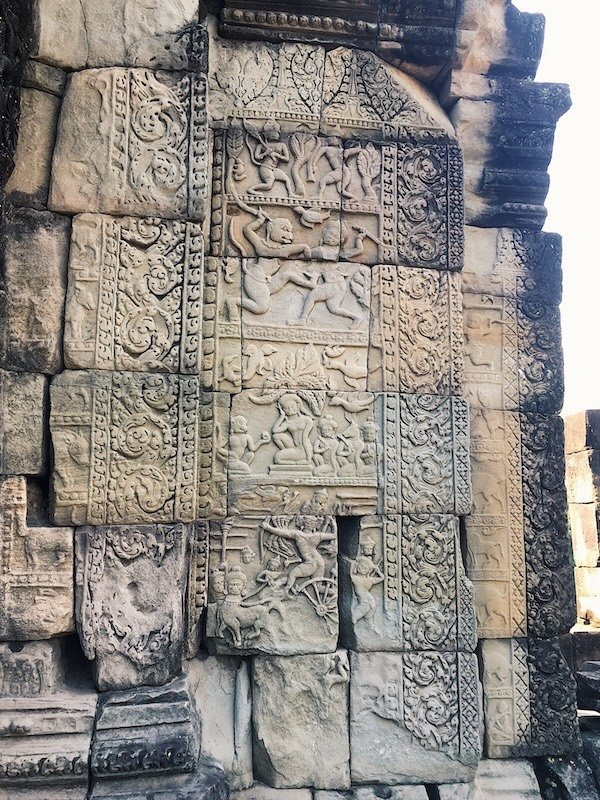
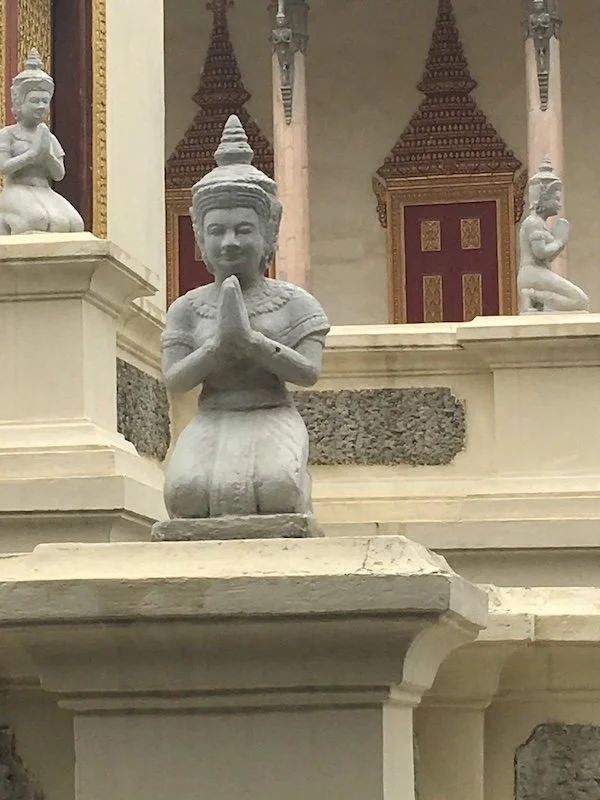
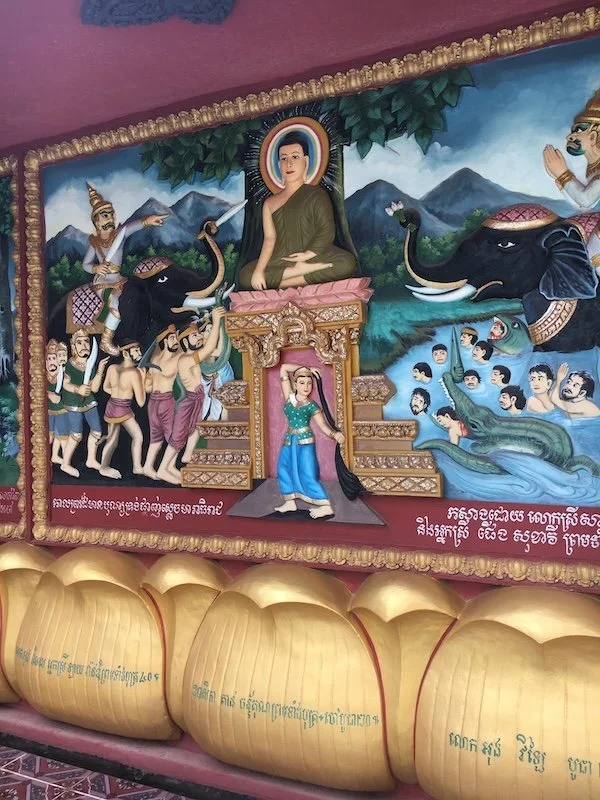
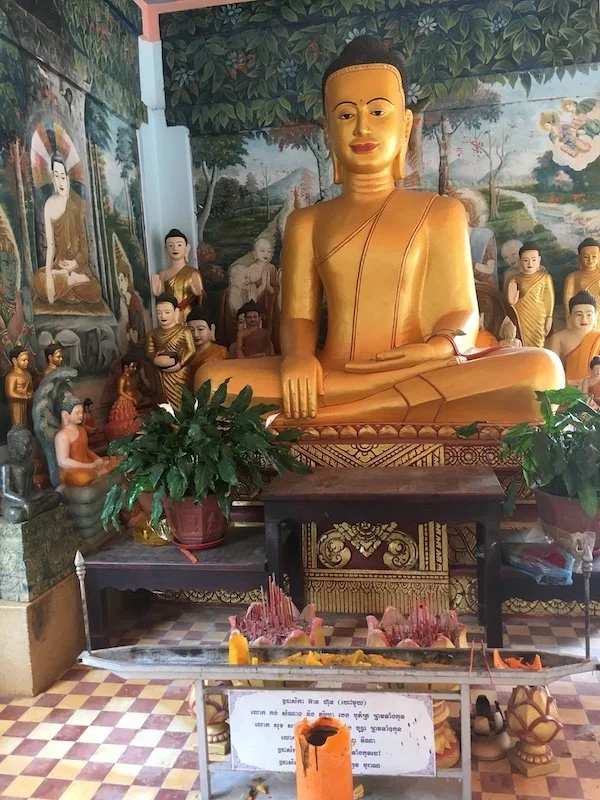
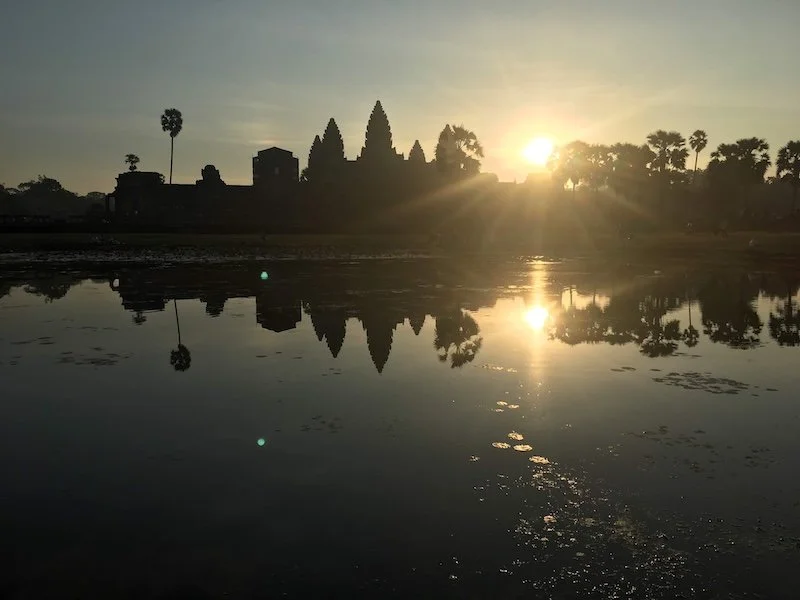
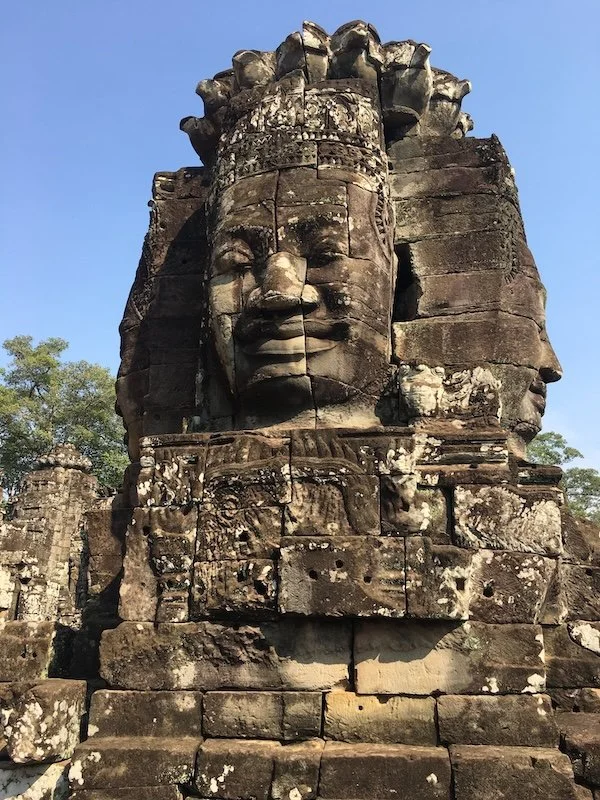
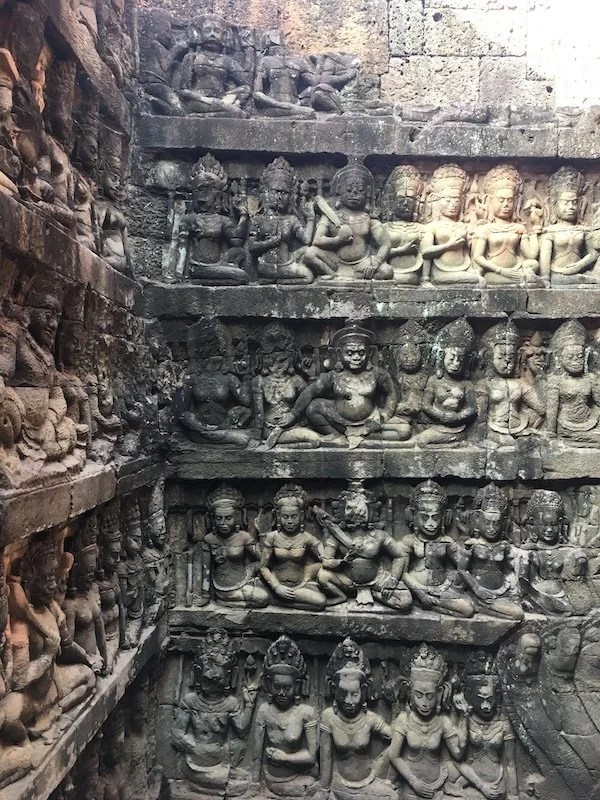
Look familiar yogis?
Don’t just take my words for it, archaeologists and yoga historians have documented countless bas-reliefs at Angkor showing deities, sages, and celestial beings in unmistakably yogic postures: lotus seats, mudras, and deep meditation. There’s also evidence that Khmer kings practiced meditation, tapas, and dharma, and that many temples were dedicated to Shiva and Vishnu, two pillars of yogic tradition. Put together, it’s pretty clear: Indian influence ran deep, and yoga was woven into Khmer spiritual life throughout the Angkor Empire.
And just like in ancient Egypt, the region saw its share of geopolitical disruptions that rewrote the cultural landscape. Some that added new layers to yoga’s thread in the region, and others that buried or blurred it.
Even without WiFi or Instagram, ideas still moved fast in the ancient world. Trade routes, pilgrim paths, and monastic networks were information highways spreading Buddhist teachings through the region the same way Hinduism had traveled long before.
When King Jayavarman VII adopted Mahāyāna Buddhism in the late 12th century, he shifted the entire empire’s spiritual compass.
By the 14th century, Theravada Buddhism had fully taken root, reshaping Angkor’s entire religious landscape.
Today, Buddhism is the most widely practiced religion in Cambodia, and it matters for the yoga landscape because Buddhist principles naturally complement yoga’s Hindu roots. Hinduism teaches that you have an eternal Self and liberation comes from realizing it. Buddhism teaches the opposite, that there’s no permanent self to cling to, and freedom comes from letting go. Hinduism leans into ritual and devotion, while Buddhism centers on meditation, ethics, and insight.
For yoga, Buddhism’s presence in Cambodia adds a layer of nuance. Its ethical foundation, the Five Precepts, mirrors the yogic yamas and niyamas almost point for point. It’s like looking at the same values through a slightly different lens, which only deepens how the practice can be digested.
Ok, so we’ve got Angkor Empire, enter Hinduism, enter Buddhism… now what?
Fast forward, like a lot, and Cambodia kind of hit the colonial jackpot.
Yes, France “colonized” it in 1863, but Vietnam totally stole the spotlight. Cambodia was more of a strategic side character than the main plot, so the French didn’t bother with heavy control, mass settlement, or stripping the place for resources. The result? Buddhism, Khmer language, and the monarchy cruised right through mostly unbothered.
Untillll major, devastating cultural collapse in the mid-1970s.
I won’t get too into the weeds with this because it’s extremely dark. But basically, the Khmer Rouge didn’t just decimate Cambodia’s population; it ripped straight through the culture itself. Pol Pot targeted traditional arts, religion, education, and family structures in an attempt to erase the past and rebuild society from zero, a twisted vision of a communist utopia. Monks were killed or exiled, temples emptied, and whole worlds of knowledge disappeared almost overnight.
Unless you’ve spent time in Cambodia, it’s hard to understand the scale of what was lost. There’s a heaviness you can feel. You walk through villages and realize there are barely any older generations left to carry the stories, rituals, and culture forward.
The Khmer people are still in the process of reclaiming their lost cultural values, slowly rebuilding what was interrupted and reconnecting with traditions that were nearly erased.
Some images from Cambodia’s genocide memorial sites:
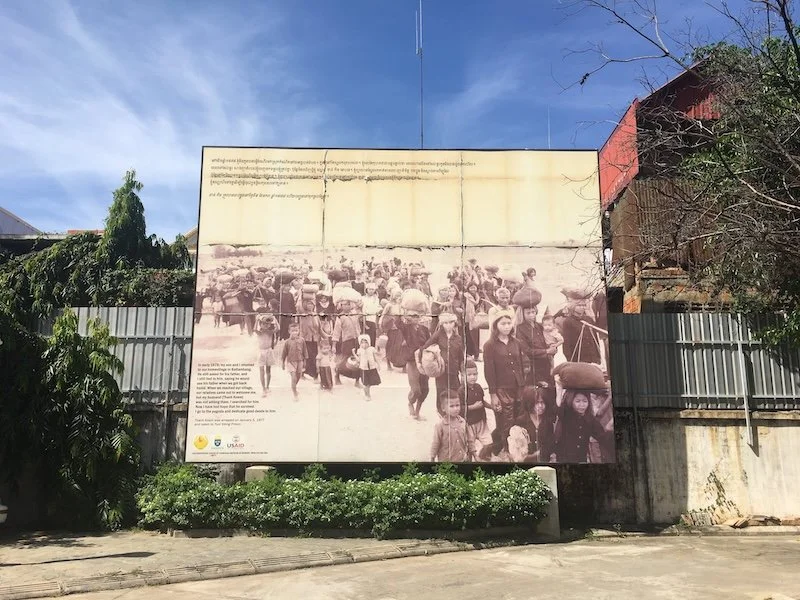
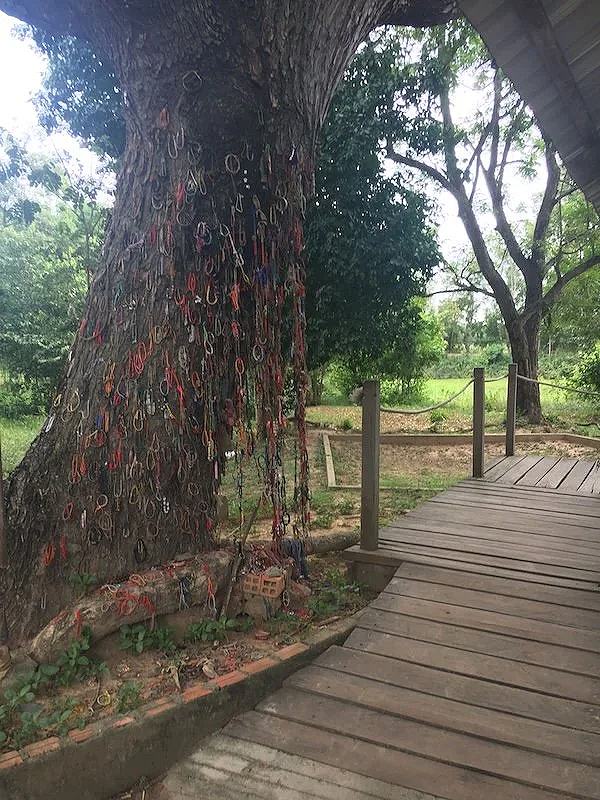
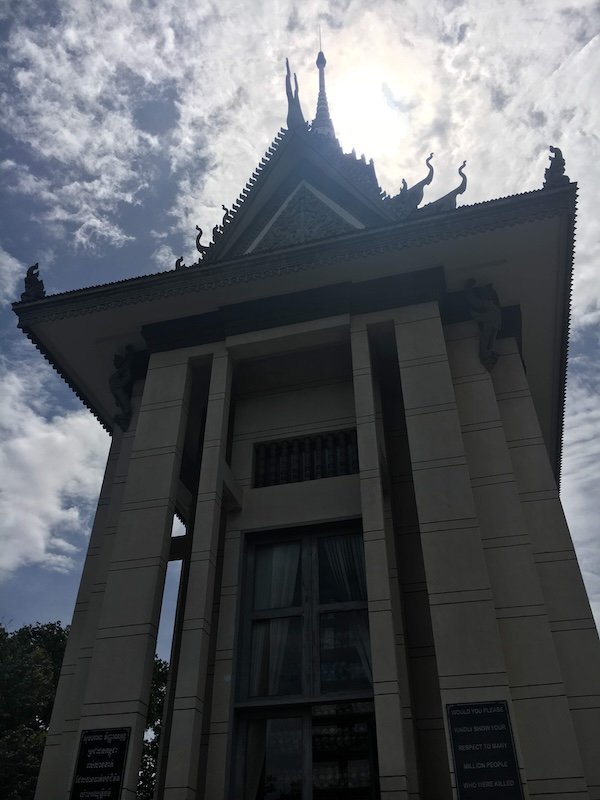
As Cambodia rebuilds, its Buddhist roots and its collective search for grounding after such a turbulent past create a natural home for yoga to flourish.
In 2004, Canadian yogi Isabelle Skaburskis and her Khmer partner-in-crime Yan Vannac launched Cambodia’s first dedicated yoga studio, NataRaj Yoga Center in Phnom Penh. Vannac went on to become the country’s first ever Khmer yoga teacher!
Yoga hasn’t totally taken off in Cambodia yet, but there are two things happening on the ground that seriously caught my attention:
Yoga as a Tourist-Friendly Commodity
Yoga was never a deep-rooted part of Khmer culture, but that hasn’t stopped local studios from offering very U.S.-style classes and selling pricey trainings and retreats to tourists against the backdrop of Cambodia’s spiritual history. Siem Reap is a hotbed for this kind of wellness tourism, with very few studios that feel truly authentic or accessible to Khmer people through lower prices or community initiatives. It’s unfortunate (and a bit exploitative), but in the world of tourism, I guess there are worse ways than mindful movement to draw visitors in.
A Natural Khmer Inclination Toward Yoga
On a brighter note, I found that Khmer people themselves are genuinely excited about yoga. Given the layers of Cambodia’s history, their draw towards yoga makes a ton of sense. Nearly all of my Khmer friends have Sanskrit-derived names like Chariya, Satya, and Vireak, so the poses and terminology actually land for them; they recognize the roots in their own language. And so many people I met were already practicing Ayurveda without calling it that: cupping, turmeric drinks, herbal oils, incense are all totally normal parts of daily life. Yogic ideas like ahimsa (nonviolence) resonate in Cambodia on a level that feels personal and deeply rooted in lived experience. Yoga settles into Cambodian culture in a surprisingly natural way.
So Khmer people aren’t exactly doing yoga in the rice fields just yet, but the foundations are all there.
I found in Cambodia, another reminder of how yoga morphs depending on where it lives. It blends with culture, absorbs memory, responds to the stories people carry.
In Kenya, yoga is communal, loud and joy-filled.
In Cambodia, it feels gentler, more introspective, shaped by history that still lingers in the air.
When it grows here, it will grow in a way that’s unmistakably Khmer.
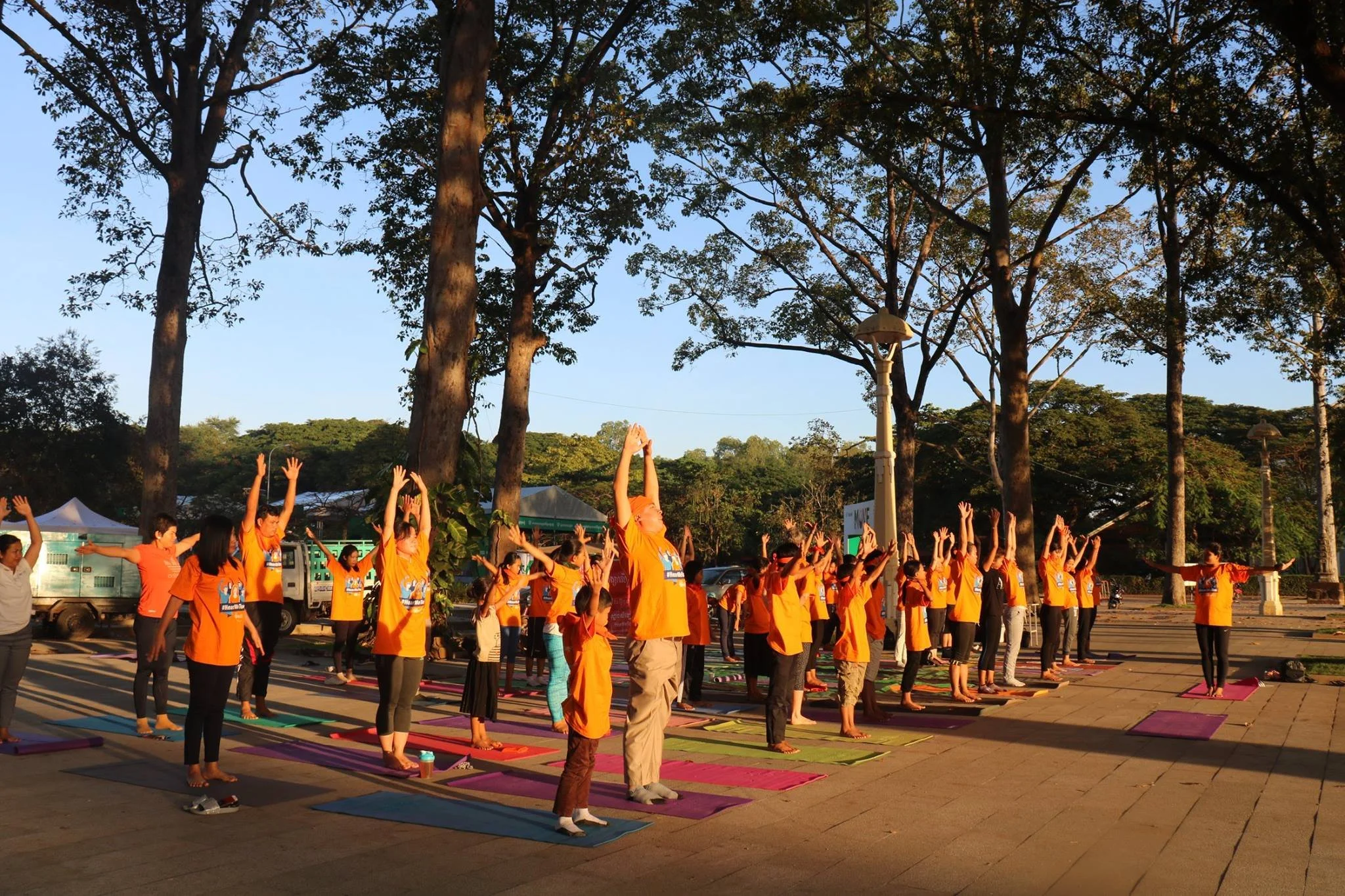
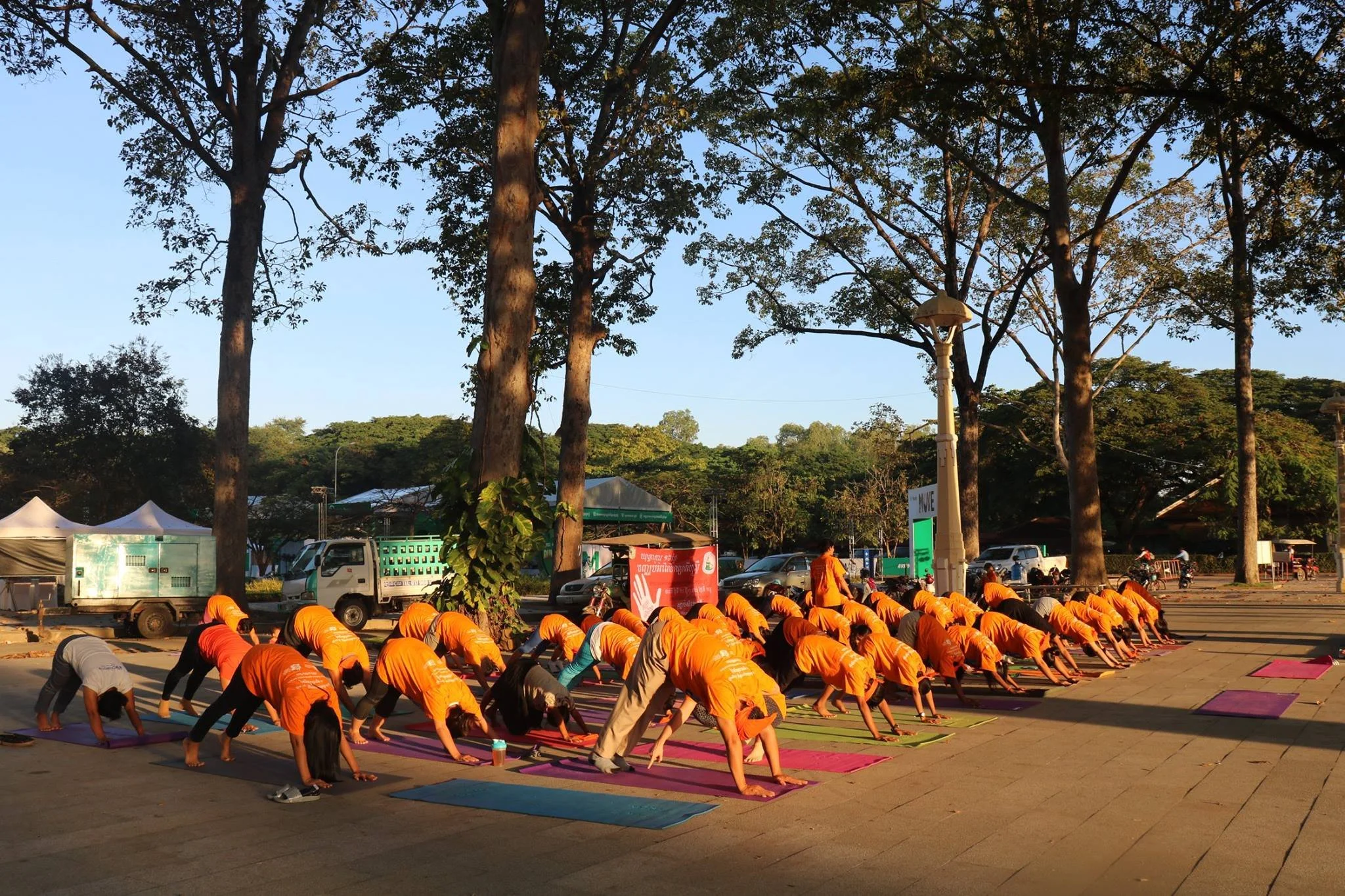
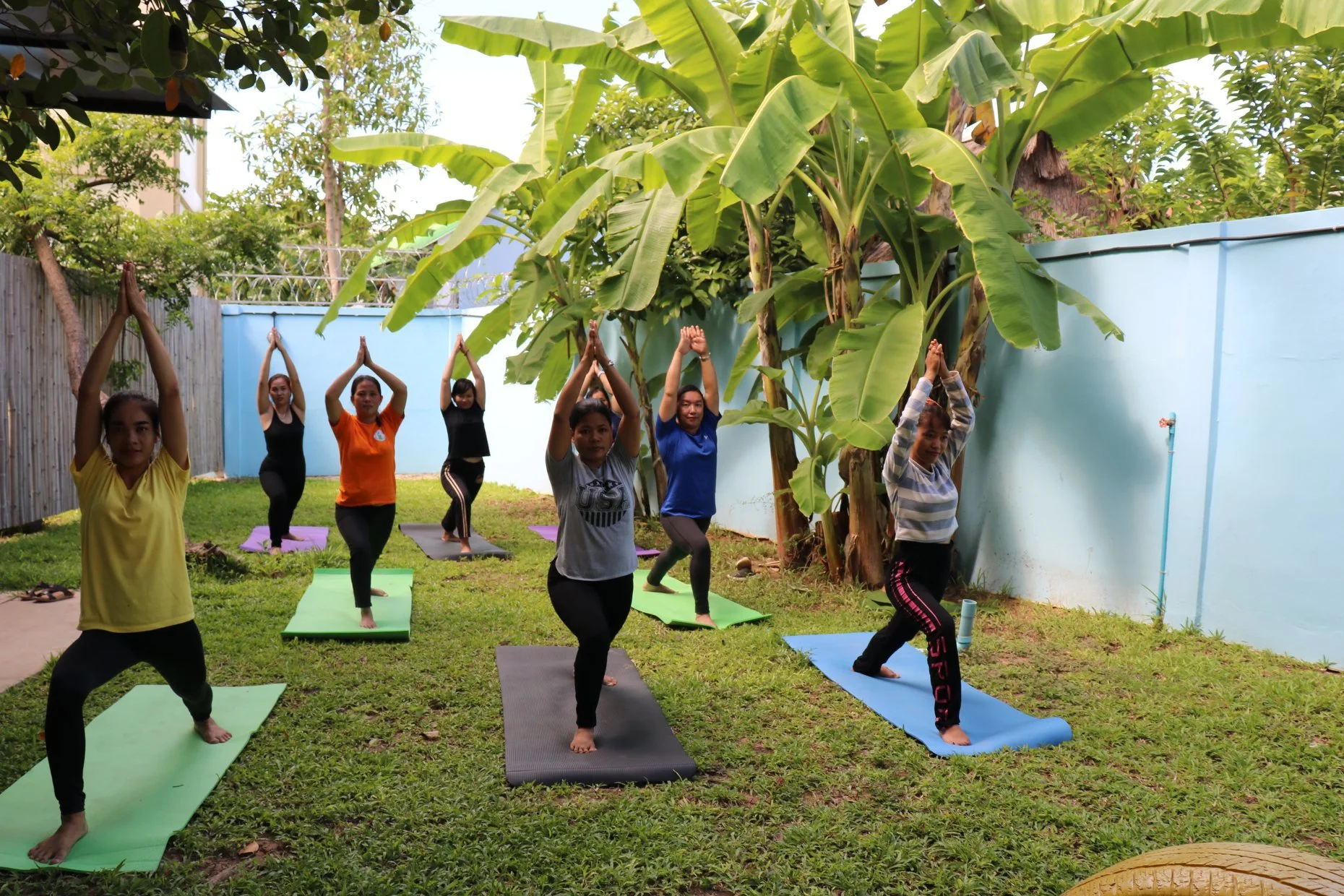
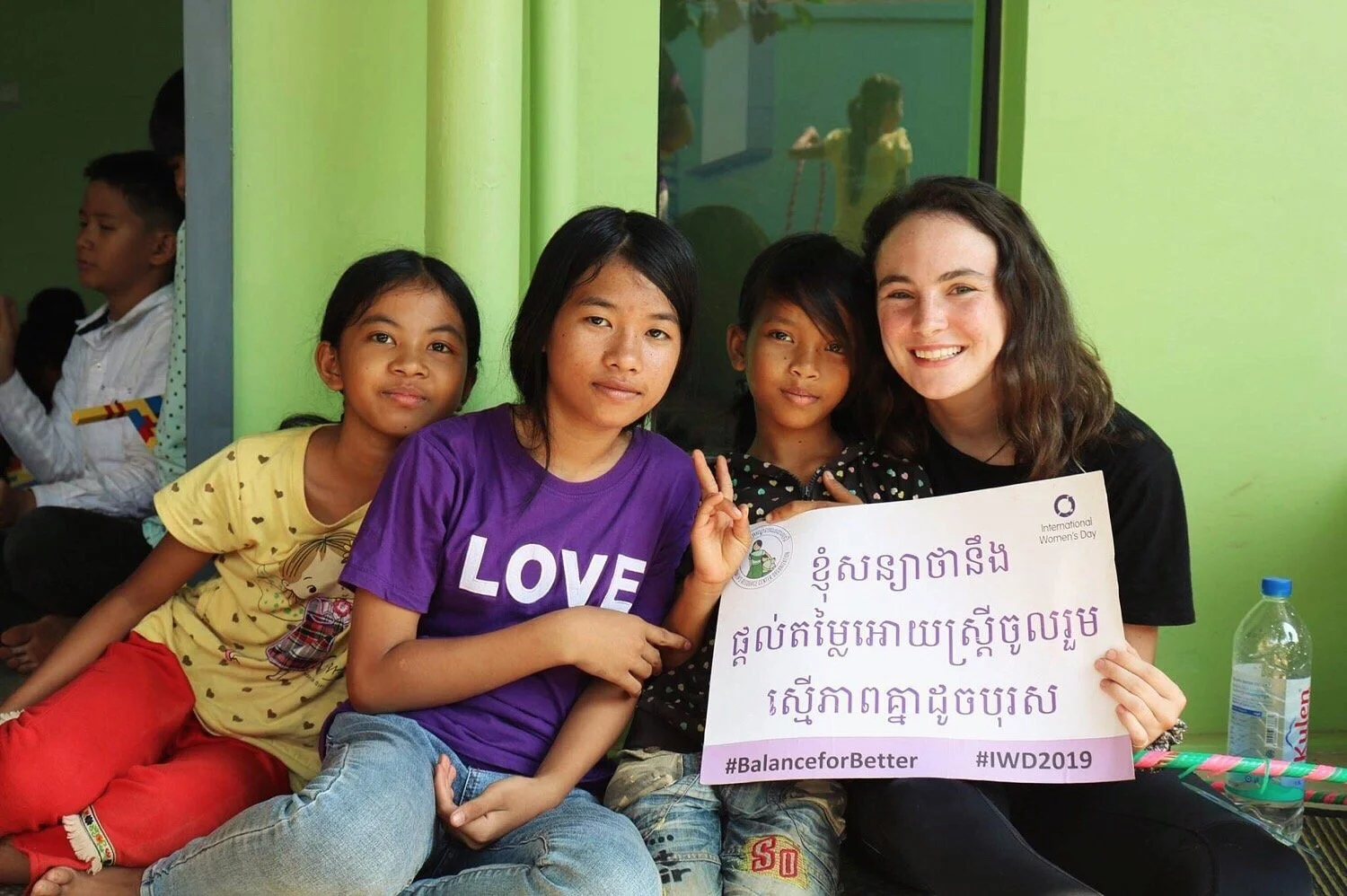
Here are a few photos from my time collaborating with the Siem Reap Women’s Resource Center, where I taught yoga as part of their End Violence Against Women campaign: